
AP Series architecture
Active vs. Passive LN₂ Foggers
Applied Physics currently maintains two distinct AP Series architecture families. Active systems include AP30, AP50, AP100 and AP200. Passive dewar-style systems include AP35, AP95 and AP175. The intelligent choice depends on operating workflow, performance requirement, service philosophy and site constraints.
The architecture map
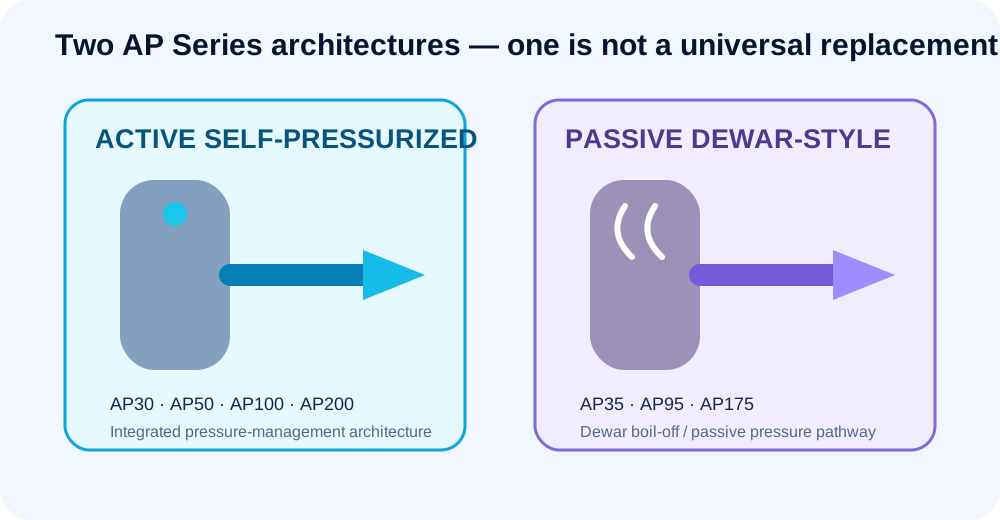
| Architecture | Models | Planning strengths | Questions to resolve |
|---|---|---|---|
| Active self-pressurized | AP30, AP50, AP100, AP200 | Integrated control pathway; scalable output; common active-system family | Pressure-management components, utilities, training, service strategy |
| Passive dewar-style | AP35, AP95, AP175 | Dewar-based pathway; fewer active pressure-generation components; familiar cryogenic operating model | Dewar state, boil-off readiness, fill timing, transport and storage |
Selection factors that matter
- How quickly must the system be ready after filling?
- Will the same operators use multiple models and need a common workflow?
- Does the facility prefer passive dewar behavior or active pressure control?
- What output, runtime and hose configuration are required at the actual introduction point?
- What maintenance capability and spare-parts strategy exists?
- How will LN₂ be supplied, transferred and held between studies?
The strategic correction
AP30 should not be described as automatically replacing AP35. The models sit in different architecture families. A replacement recommendation is defensible only after the application, operating workflow and current specifications are compared.
This distinction also protects Applied Physics from a bad commercial habit: steering every legacy or passive-system customer toward the newest active platform without proving fit.
Applied Physics technical review
Build a defensible fogger requirement
Send Applied Physics the room, process, utilities, documentation and safety constraints—not just a model number.