
Evidence engineering
Smoke Study Video Documentation
A fog pattern that is obvious to the people standing in the room can be nearly invisible—or misleading—on video. The recording method belongs in the protocol and should be tested before the formal study.
Minimum video design
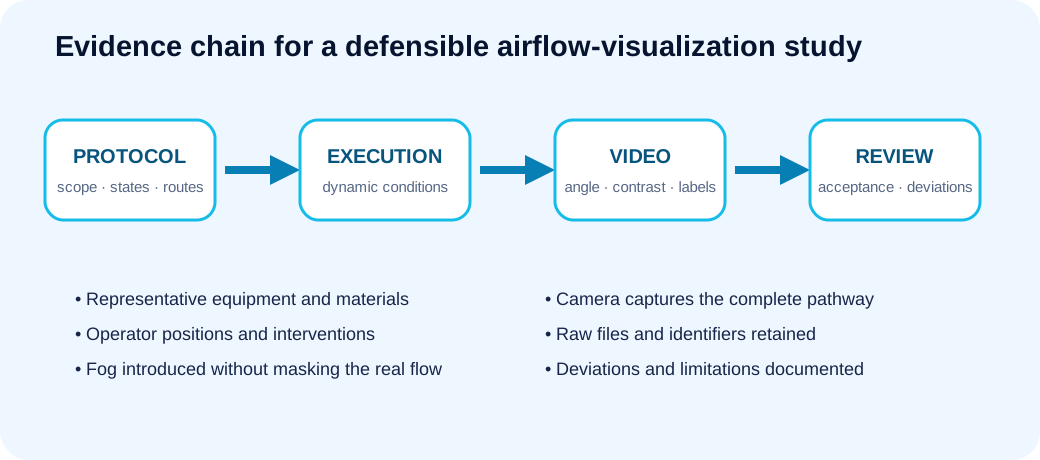
- Stable tripod or controlled camera movement
- Fixed exposure and focus where practical
- High-contrast background and side lighting
- Room, equipment and sequence identifiers in frame
- Wide context view plus critical-zone detail
- Pre-fog reference image and post-event continuation
- Synchronized narration or controlled annotations
- Retention of raw files and approved final exports
Avoid persuasive editing
Editing should improve navigation, not hide unfavorable airflow. Preserve the complete raw sequence, document removed non-study time, and make deviations traceable. A reviewer should be able to see when fog starts, how it enters, what intervention occurs and what happens afterward.
Qualify visibility
- Can the viewer distinguish the fog from glare?
- Are hands, tools and product-contact surfaces visible?
- Does the frame show both source and destination?
- Does the camera auto-exposure erase thin return flow?
- Are timestamps, model ID and room state recoverable?
- Can another reviewer reach the same conclusion?
Applied Physics technical review
Build a defensible fogger requirement
Send Applied Physics the room, process, utilities, documentation and safety constraints—not just a model number.