
How LN₂ Cleanroom Foggers Work
A liquid-nitrogen fogger uses the extreme temperature difference between LN₂ and a heated high-purity water system to create a dense visible cloud of fine water droplets. The visible output is water fog carried by expanding nitrogen gas—not combustion smoke.
Energy and phase change
Liquid nitrogen boils at cryogenic temperature. When controlled LN₂ meets the engineered heat-transfer section, it rapidly changes phase and absorbs heat. The expanding nitrogen stream interacts with high-purity water to generate the visible fog. The process must be controlled so the output is useful without introducing excessive jet momentum that masks the room’s actual airflow.
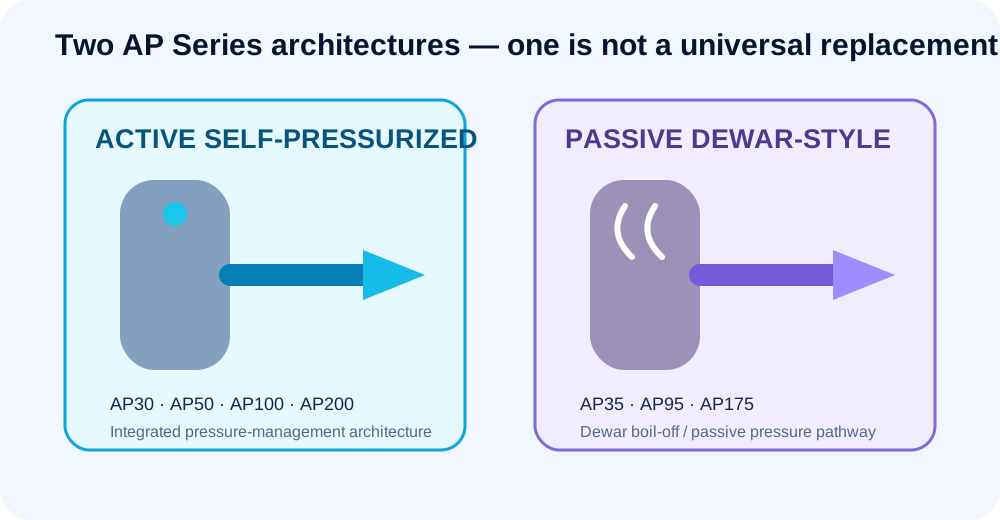
Architecture changes the pressure pathway
Passive dewar-style systems use boil-off behavior and dewar pressure as part of the delivery mechanism. Active self-pressurized systems use an integrated pressure-management architecture. That difference changes filling, readiness, control behavior, service needs and the operational sequence; it is not a cosmetic model distinction.
Why fog behavior changes in the field
- Higher room air velocity can shorten visible travel and thin the cloud.
- Lower humidity and warmer conditions can accelerate evaporation.
- Long hoses, splitters, curtains and restrictive routing can reduce or redistribute outlet performance.
- A positively pressurized isolator can resist fog introduced from outside.
- Camera exposure, lighting and background can make the same fog appear dramatically different.
Build a defensible fogger requirement
Send Applied Physics the room, process, utilities, documentation and safety constraints—not just a model number.